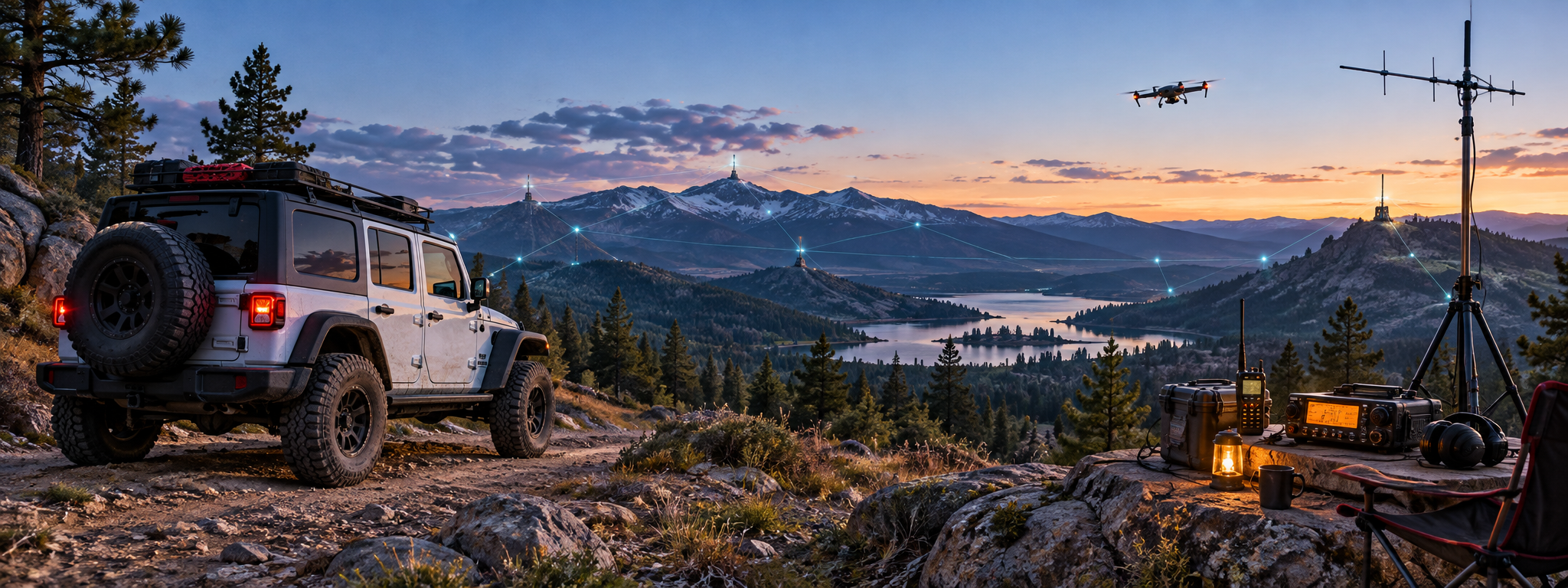
Welcome to K5NWZ.com
From mesh radio to a wider world of hobbies
I’m Shawn, K5NWZ. This is where I share working projects in off-grid mesh, amateur radio, automation, workshop technology and outdoor travel. You do not need prior experience—choose what interests you and start with the plain-language introduction.
Here because of MeshCore or Meshtastic?
You are already exploring radio
Many visitors first hear about K5NWZ.com through a mesh node. If that is you, welcome. Mesh radio is an excellent doorway into antennas, propagation, packet data, mapping, emergency communications, electronics, and eventually amateur radio. You can begin by watching and learning—there is no pressure to understand everything at once.
EXPLORE THE MESHCORE & MESHTASTIC GUIDE →The best first stop
Start with Live Now
Live Now brings together current radio activity, mesh traffic, station data and weather. Some panels may be quiet, and that changing activity is part of radio.
OPEN LIVE NOW →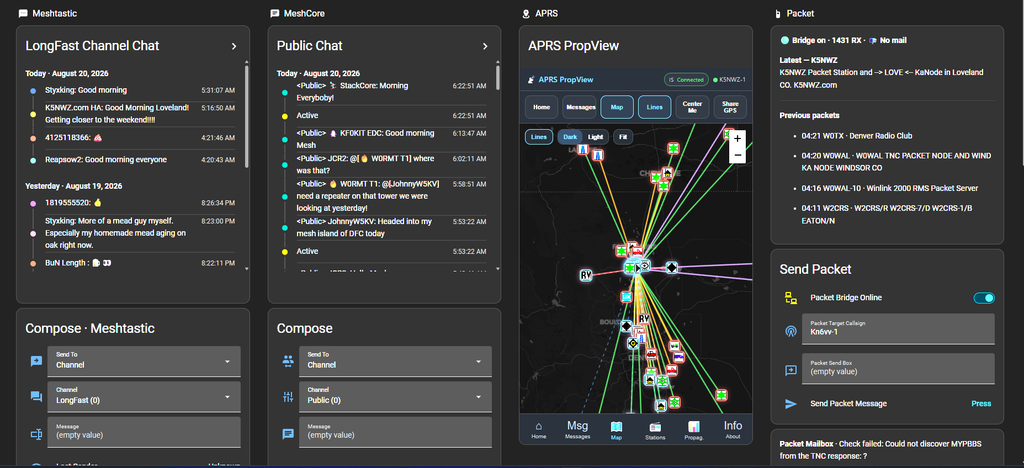
Choose a direction
What would you like to explore?
Each path begins with a plain-language introduction and leads into the live tools, detailed guides, and real station activity.
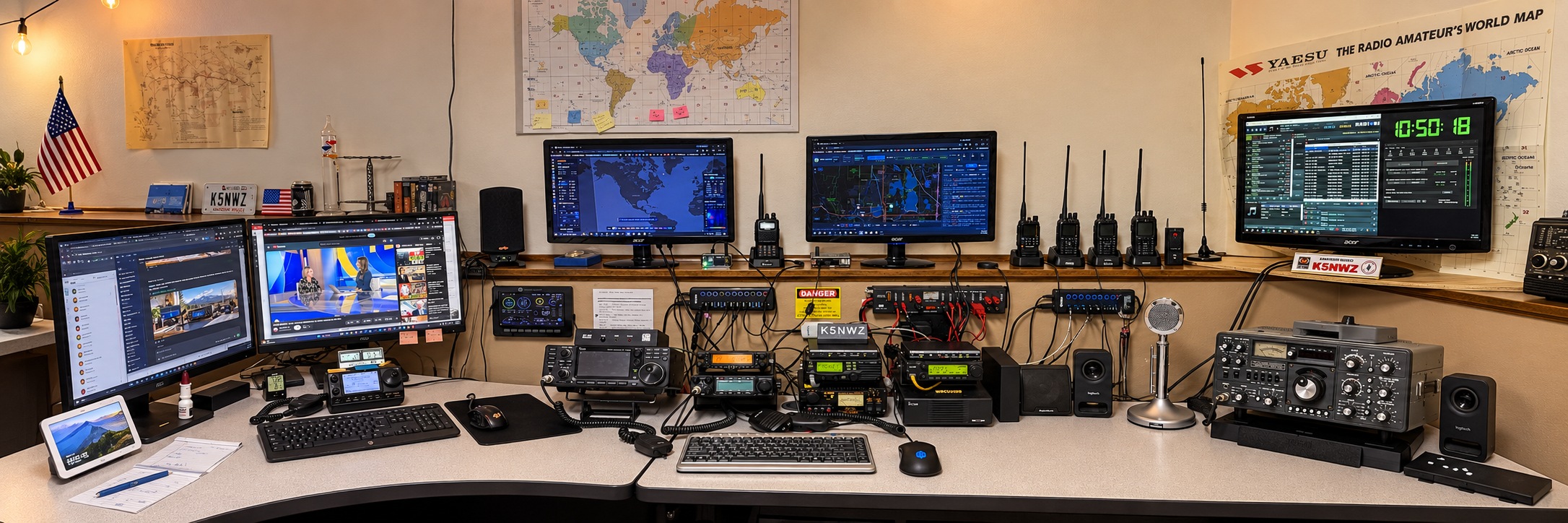


Recently added and expanded
New live tools, deeper guides, and more ways to explore
K5NWZ.com keeps growing as projects move from the workbench into the field. Recent updates connect the explanations to live radio signals, current station reports, real automation dashboards, and practical local information.
Listen on the live SDR
Choose a signal, open the receiver already tuned, watch the waterfall, and try built-in decoders for voice, APRS, packet, FT8, SSTV, Meshtastic, and MeshCore.
Open the SDR guide →See stations being heard
Follow live station reports, Parks on the Air and Summits on the Air activity, report age, band conditions, and propagation clues.
View station spots →Tour the Home Assistant brain
See how security, cameras, doors, windows, weather, radio, packet, and mesh tracking come together in one locally controlled system.
Explore Home Assistant →Find clubs and repeaters
Compare Northern Colorado and Southern Wyoming clubs, meeting activities, public links, repeater programming details, and approximate coverage.
Find clubs and repeaters →Your next step into radio
Want to transmit instead of only listen?
The Technician license is the usual U.S. starting point. You do not need an engineering background: learn the basics, practice with the public question pool, then take an in-person or online exam.
Listen, watch, and decode
Radio is more interesting when you can experience it
The site connects explanations with real signals. Listen through the online SDR, watch APRS stations move across a map, learn what packet and digital modes sound like, or step back in time with Wayback Radio.
Built for newcomers
You are not expected to know where to begin
Every major topic starts in plain language, shows the equipment, and connects to a real example. You can listen and learn without an amateur-radio license.
Built to share
One link for friends and fellow experimenters
The site is also a practical library of station information, project notes, useful software, live dashboards, and lessons learned.
Follow your curiosity
There is no required order. Open Live Now, choose a topic from the menu, or send me a message if something raises a question.