K5NWZ • WAYBACK RADIO
Step back in time. Press play.
Comedy, mystery and adventure from radio’s golden age.
Listen to classic radio shows online with K5NWZ Wayback Radio. Discover a comedy favorite, settle into a western or let a mystery unfold—no vintage radio required. Press play below and let the voices, music and sound effects build the pictures.
Listen live
Audio stopped? The radio reconnects by itself. If it stays quiet, turn the power knob off and on again.
Listen closer. There’s a whole studio in the sound.
Voices that set the scene
Listen for the announcer’s introduction, a character’s delivery and the musical bridges. A small cast can make an entire world feel real.
The theater of sound
Footsteps, doors and carefully timed effects tell you where you are. Close your eyes for a moment and notice the scene your imagination creates.
Hear the recording’s history
A little hiss, fading or limited bandwidth comes with many surviving recordings. Behind that texture are performances preserved across generations.
Vintage studio illustrations created for K5NWZ Wayback Radio.
Why I Created K5NWZ Wayback Radio
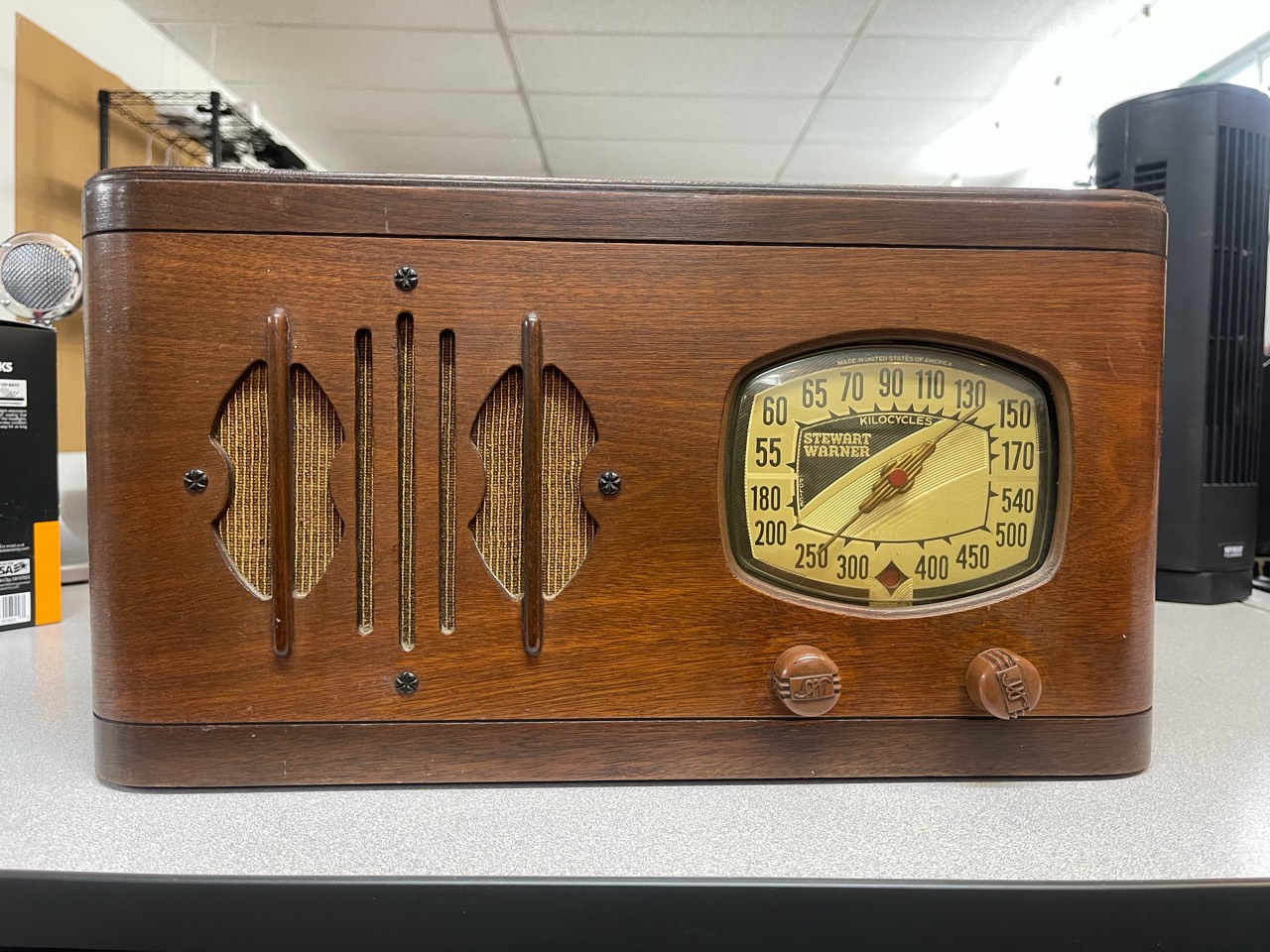
It started with an old farm radio—and, as these things often do, a rabbit hole.
When I acquired this Stewart-Warner radio and began working on its restoration, I found myself imagining its earlier life. Where had it sat when it was new? Who gathered around it? What was happening in the world as those people turned the dial and listened?
Restoring the radio would bring the hardware back to life. But then I pictured tuning it to a modern AM station.
That would break the spell. The cabinet, the tubes, the dial—all that history—and out would come today’s programming. I wanted the sound to belong to the experience.
Giving an old radio a station of its own
My first thought was to tuck a small MP3 player inside and let it cycle through old radio shows. Then I realized there was a better way: feed those recordings into a small AM transmitter. The radio could receive them over the air, just as it was designed to do. So could the other AM radios in my collection.
I wouldn’t just be restoring a radio. I’d be giving it a station worth tuning into.
And that was the entrance to the rabbit hole.
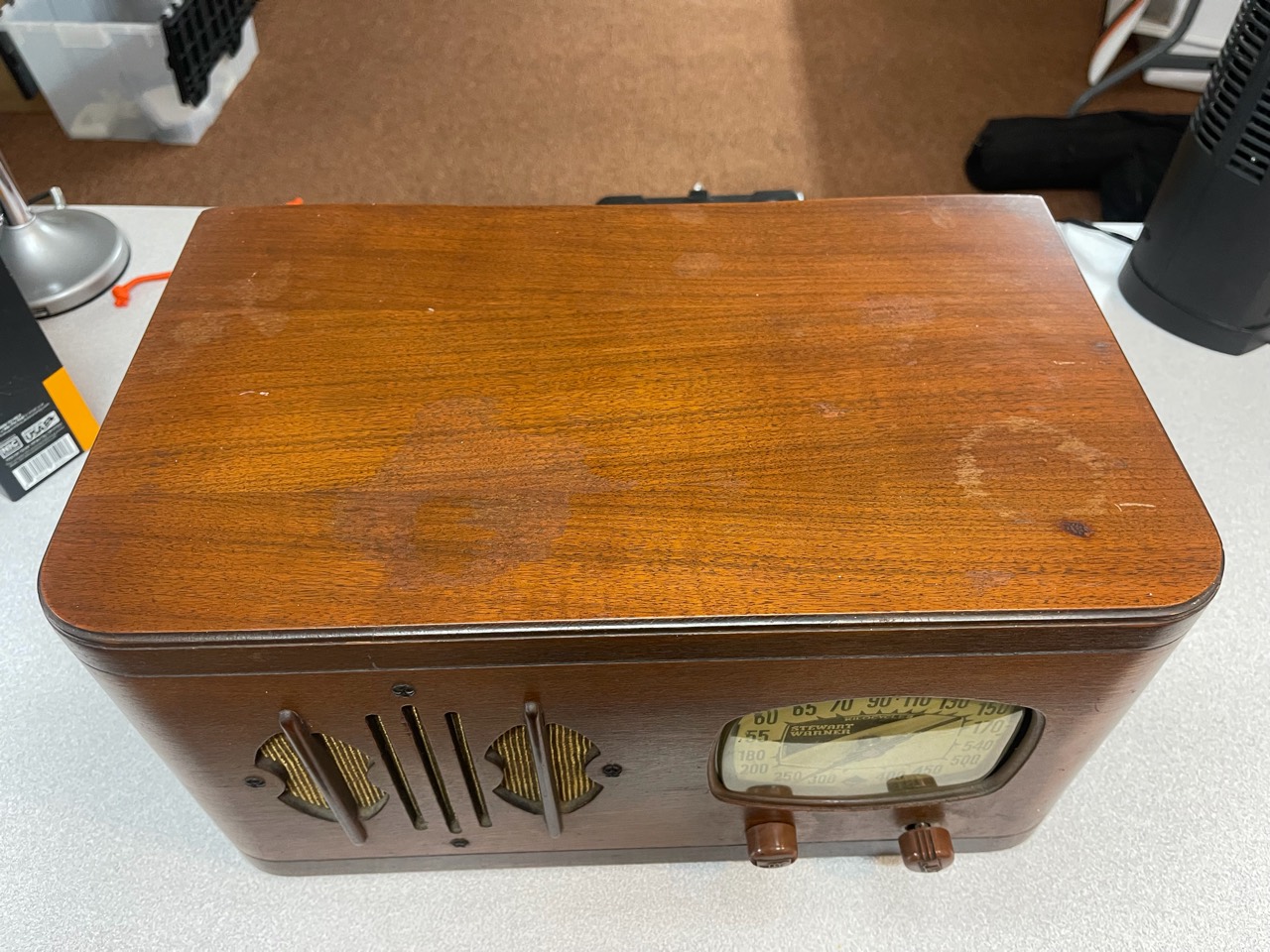
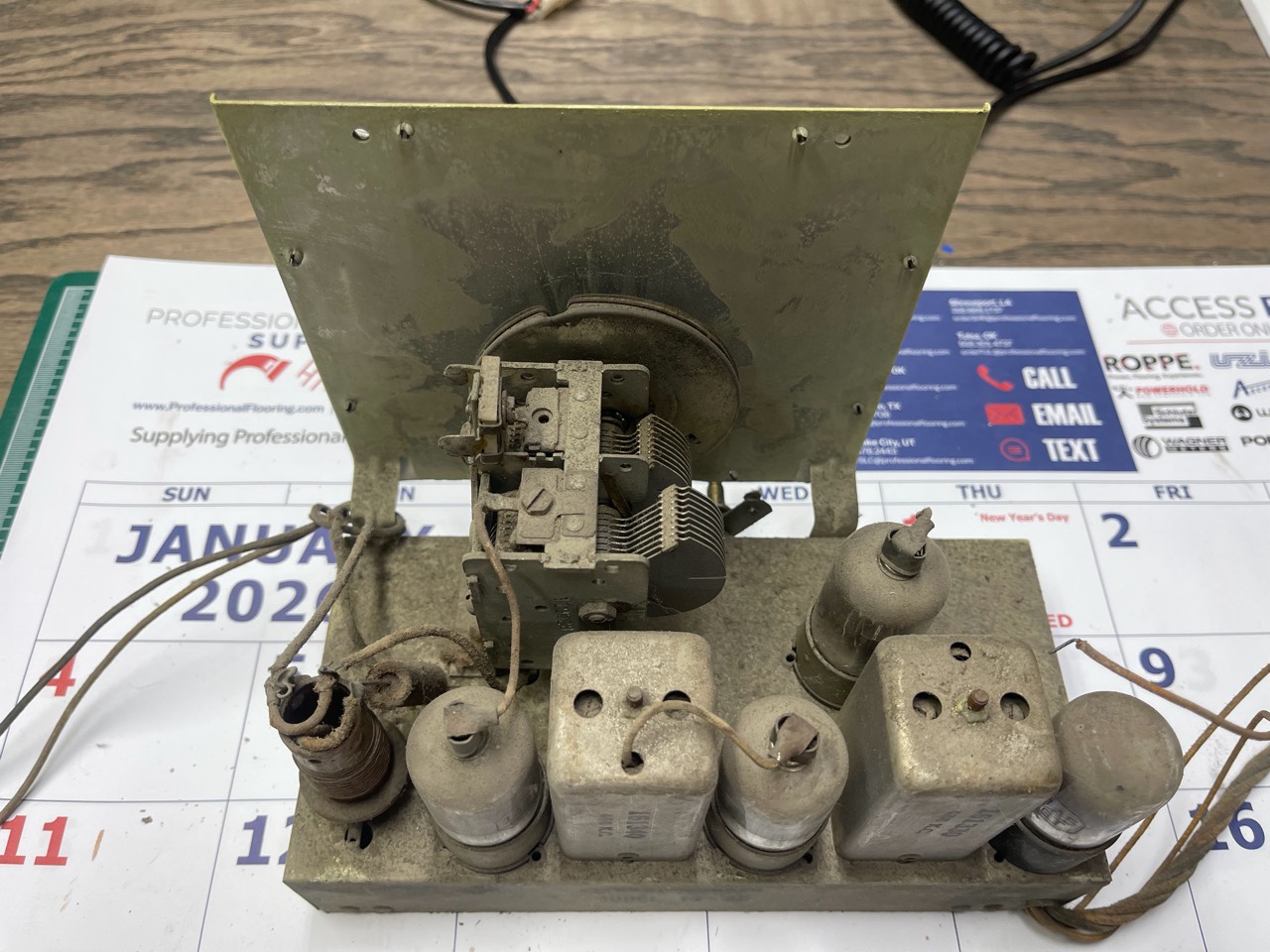
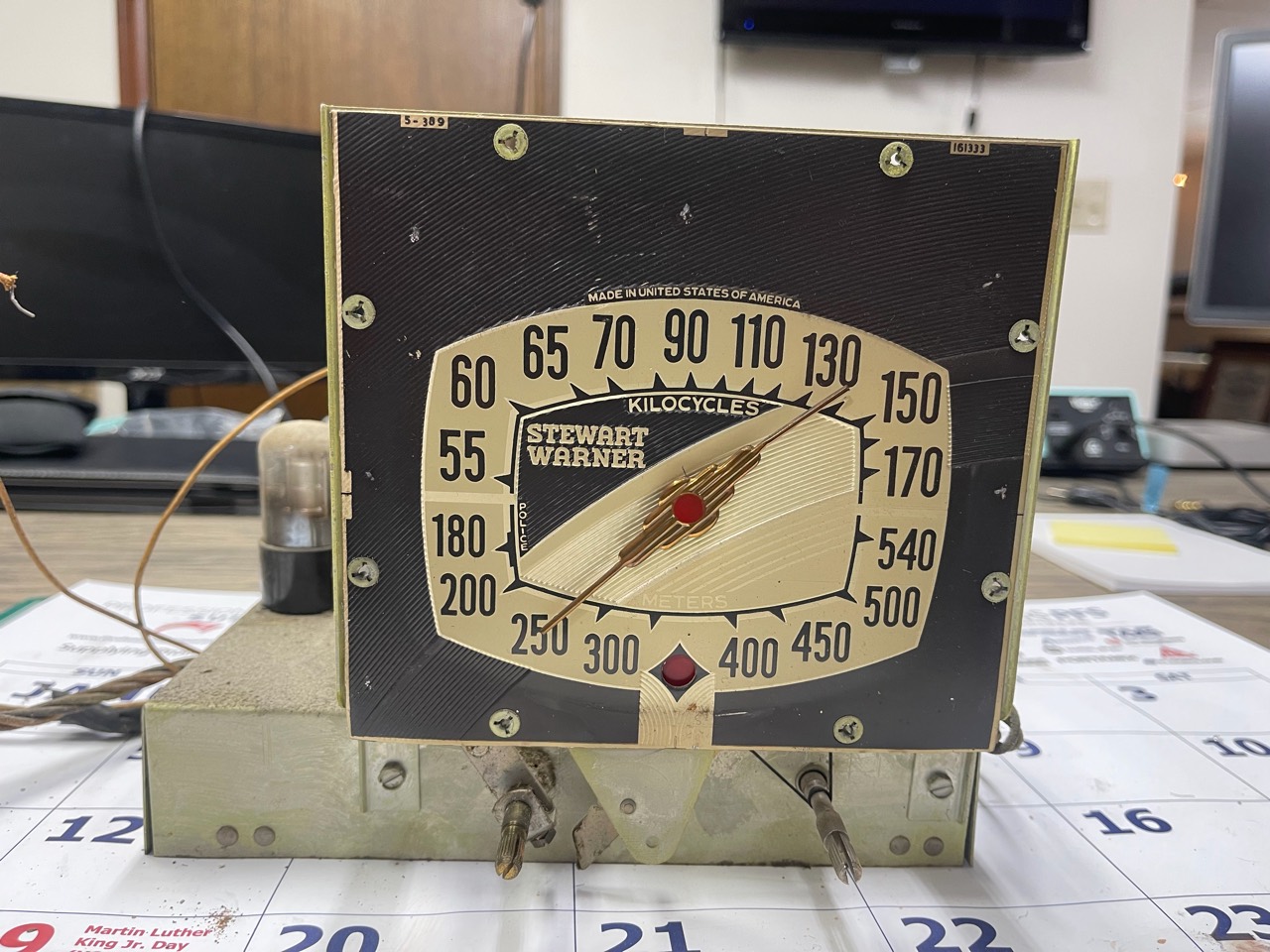
About this radio: The original cabinet label identifies it as a Stewart-Warner Model 12-4D1. Period service literature lists this model in the 1941 series—a battery-powered farm radio from the years before electricity reached every rural home. That establishes the model’s era, rather than an exact factory date for this individual set. Identification: original cabinet label; dating reference: Radio-Craft, April 1942, p. 464, “1941 Series.”
From the workbench to the world
A collection of recordings became a programming project. I wanted a station with some personality: comedies, westerns, science fiction, mysteries, historical news, and station IDs between programs. Something you could turn on and discover, rather than another playlist you had to manage.
Eventually, I thought: why keep this to myself?
That became K5NWZ Wayback Radio, streaming through this website so anyone could listen. You don’t need an antique radio to enjoy it—but if you have one, there’s something especially satisfying about hearing these programs through its speaker.
At my place, a Raspberry Pi receives the stream and feeds a small AM transmitter. I can turn on an AM radio, tune the dial, and find K5NWZ Wayback Radio on the air. Modern technology quietly supplies the programming while the old radio does what it was built to do.
One rabbit hole, with more to explore
If there’s enough interest, I may put together a ready-to-install Raspberry Pi image that makes this easier for other collectors: connect a compatible small AM transmitter, start the stream, and give your own radios something familiar to play. That’s an idea for the future, rather than something available today.
This is a hobby, and building it has been part of the fun. I tend to follow my curiosity, moving between radio, restoration, tinkering, and my other projects. K5NWZ Wayback Radio will keep evolving as I circle back with new ideas.
For now, I hope it gives you a little of what I was looking for when I first brought that farm radio home: the chance to turn a dial, hear another time, and let your imagination fill the room.
Bring K5NWZ Wayback Radio to an old AM radio
That warm dial and wooden cabinet can be part of the experience, too. A small, compliant AM transmitter can send the stream across a short distance to a working vintage radio—without modifying the radio.
K5NWZ Wayback Radio stream → Raspberry Pi or other player → audio cable → AMT-MW207 → AM radio
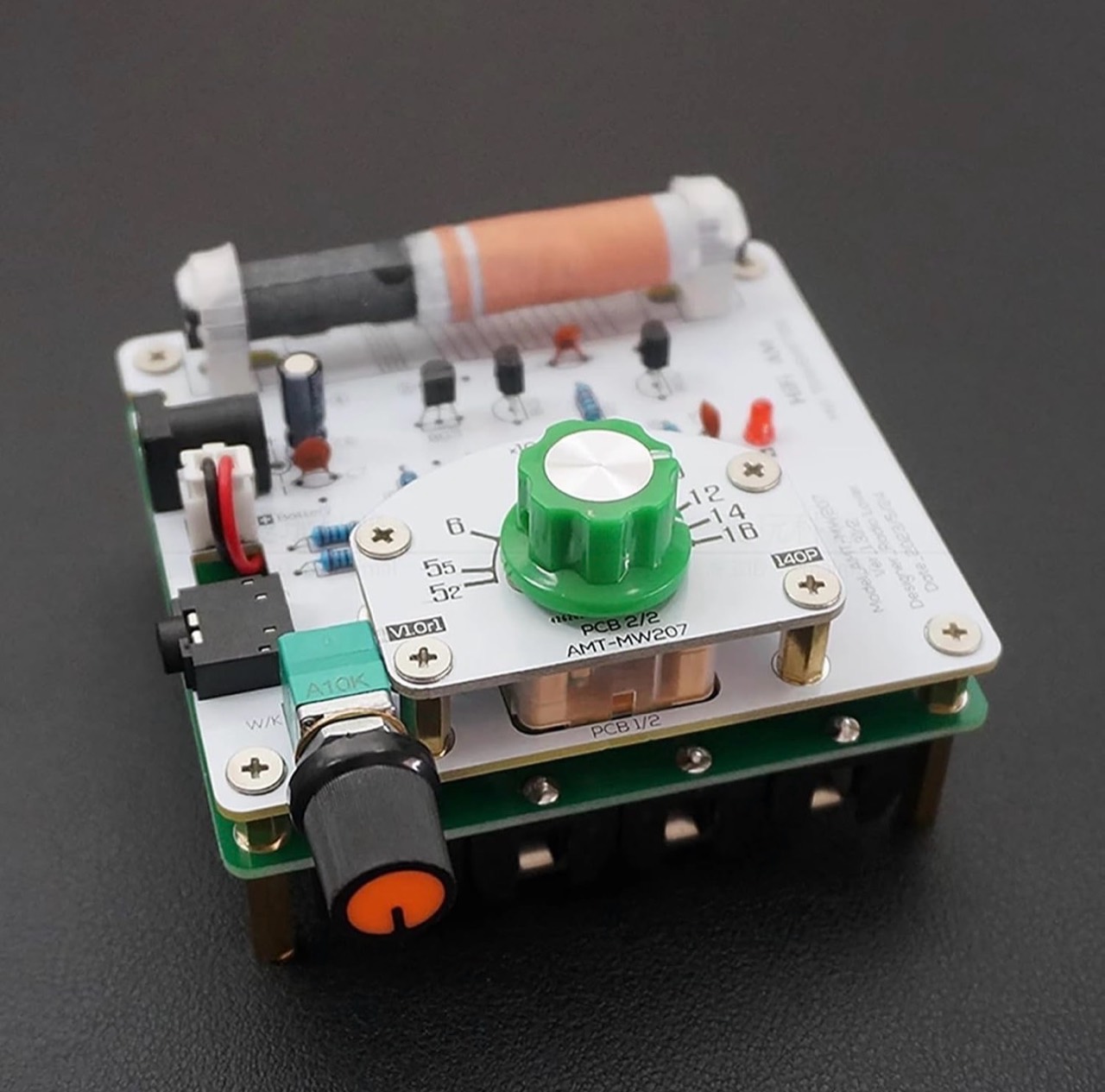
- Start the stream. I use a Raspberry Pi to receive K5NWZ Wayback Radio. A computer, tablet or phone can also supply the audio. Keep the player connected to the Internet and playing.
- Feed the transmitter. Connect the device’s headphone or line output to the transmitter’s audio input using the cable its manual specifies. A Raspberry Pi without an analog audio output can use a compatible USB audio adapter or DAC; a phone may need a USB-C or Lightning audio adapter.
- Pick a quiet spot on the AM dial. Choose an unused frequency that both the transmitter and your radio support. Follow the transmitter’s antenna and setup instructions.
- Tune in and enjoy. Keep this small transmitter close to the receiving radio; usable distance varies with the receiver and setup. Tune the radio to that same frequency. Start with a modest source volume and adjust until voices sound clear rather than distorted. Control listening volume on the radio.
The radio receives an ordinary AM signal. It needs no Wi-Fi, Bluetooth or audio-input socket. The streaming device supplies the Internet connection; the transmitter makes the local AM signal.
Keep it small and compliant. In the U.S., use an AM transmitter designed for FCC Part 15 operation and follow its installation limits. A compliant setup can operate without an individual broadcast license, but must not cause harmful interference; stop transmitting if it does. Don’t add an amplifier or extend the antenna beyond the permitted setup. Outside the U.S., check local rules. Reference: FCC Part 15, §§15.5 and 15.219.
Give an old set a safe start. Have an unrestored tube radio inspected by a qualified vintage-radio technician before powering it up. These sets can contain hazardous voltages. This setup sends audio over the air—do not wire a phone or computer into the radio’s internal circuitry.
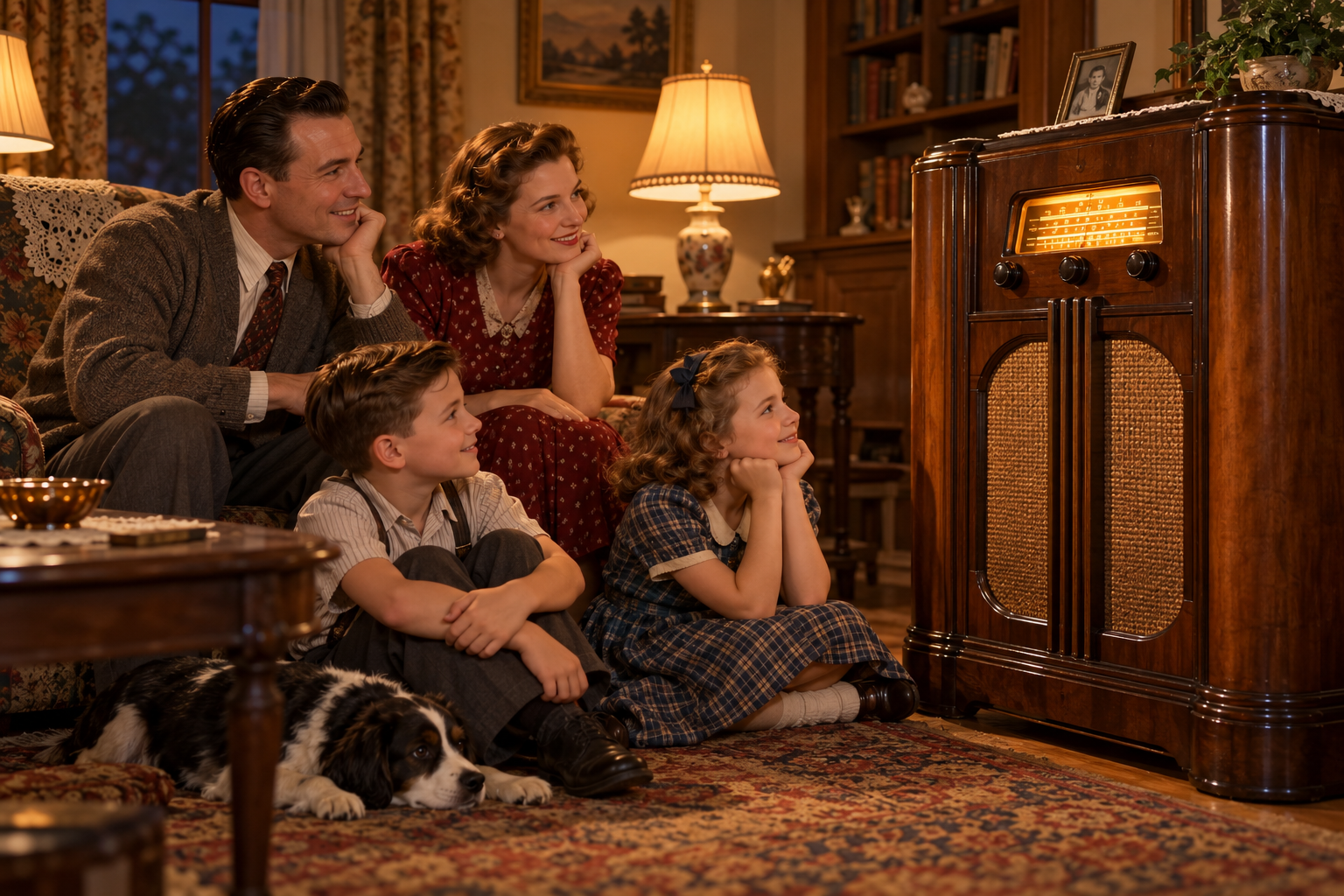
THE WORLD BEHIND THE RECORDINGS
When America Gathered Around the Radio
How radio brought laughter, suspense and the outside world into homes during the 1930s and 1940s.
Imagine an evening before television became a household fixture. There is no screen to watch, no streaming menu to browse. Someone turns a dial, finds a familiar station, and a voice fills the room.
A comedian pauses for a laugh. A detective hears footsteps. An announcer interrupts with news from overseas.
During the 1930s and 1940s, radio helped Americans experience the world together. Listening to those broadcasts today brings us closer to the people who first heard them—their routines, worries, sense of humor and hopes for tomorrow.
A familiar voice during difficult times
Radio grew dramatically during the Great Depression. American households with radios increased from approximately 12 million at the beginning of the 1930s to more than 28 million by 1939. For families who owned a set, an evening’s entertainment could come to them without another admission ticket. Comedians such as Jack Benny and Fred Allen became familiar visitors, while continuing stories gave listeners characters to follow from one broadcast to the next. [1]
Think about what that familiarity meant. Work might be uncertain. Money might be tight. But a favorite voice would return at its appointed time.
That is part of the appeal these recordings still hold. You aren’t simply hearing an old joke. You’re hearing the kind of company someone welcomed into an ordinary evening.
A whole world built out of sound
Radio drama asked listeners to participate.
A door creaks. Someone hesitates before answering. Footsteps stop just outside the room. You supply the hallway, the face and whatever might be waiting in the darkness.
Comedy, serial drama, music and variety programs all found places in the broadcast day. Morning programs could be conversational and informal; daytime serials encouraged regular listening. Household-product sponsorship helped give “soap operas” their lasting name. The schedule became part of daily life. [2]
For a modern listener, the best way to appreciate this storytelling is to let the sound do its work. You don’t need to study the recording. Just give it enough attention for the scene to take shape.
When the president came into the living room
Radio also changed the relationship between Americans and their government.
Beginning in March 1933, Franklin D. Roosevelt used the addresses remembered as his fireside chats to explain major issues in a conversational voice. His first addressed the banking crisis. Rather than sounding like a distant figure speaking from a platform, he aimed to speak as though he were visiting listeners at home. [3]
The intimacy mattered. A newspaper could print a leader’s words; radio added his tone, timing and reassurance.
The war came through the speaker
During World War II, radio brought distant events into the home through reports, interviews and personal accounts. The Library of Congress documents how broadcasts such as We, the People presented wartime experiences to American audiences, connecting individual stories with the larger conflict. [4]
There is something especially powerful about hearing those recordings now: the people speaking did not know everything that would happen next.
We know how the war ended. They were living through an unfinished story.
When a historical news recording plays on K5NWZ Wayback Radio, listen for that uncertainty. The pauses and urgency can reveal something a modern summary cannot.
The commercials belong to the story, too
An original advertisement can be surprisingly revealing. Listen to what it promises, how the announcer addresses the audience, and how naturally the sponsor fits into the program.
Those moments help place a recording in its own time. On K5NWZ Wayback Radio, preserving period commercials keeps that connection intact.
The past wasn’t equally welcoming to everyone, however. Access to receivers was uneven, and racial stereotypes appeared throughout broadcasting. Enjoying historic radio need not mean overlooking those realities. They are part of understanding what survives. [5]
Listen beyond the plot
The next time you settle into a K5NWZ Wayback Radio program, notice the small things: an unfamiliar expression, the rhythm of an announcer’s delivery, a musical transition, a character’s idea of an expensive purchase.
These details make old recordings more than entertainment. They preserve traces of everyday life.
For a little while, you can hear something much as another listener heard it decades ago—waiting for the next laugh, the next clue, or the next voice from far away.
Turn it on. Settle in. Let the pictures form.
Pull up a chair. Let the radio tell the story.
Keep K5NWZ Wayback Radio company while you work, unwind or tinker. Bookmark the station, share it with a friend, and come back at another time to discover a different show.
Have a favorite program or something to report? Join the conversation on Discord.